
 Forest Hill
 December 21, 2025
"A Time for Decisions"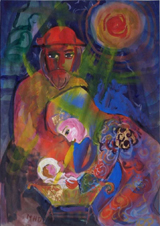
We know virtually nothing historical about Joseph. He is named in Jesus’ birth stories in both Luke and in Matthew, and then is never seen again. By the time Jesus is an adult, the stories describe Jesus as the son of “Mary”, not the son of “Joseph”, suggesting that by that time Joseph had been dead for a long time. The only reference to a father in the stories of the adult Jesus are when people in Nazareth call him “the carpenter’s son,” but even there the “carpenter” is not named.
Many things, clearly, are lost in the mists of time, because the gospel writers didn’t share our passion for historical detail! They wrote to persuade us that Jesus’ message was worth paying attention to, and details that didn’t serve their purpose got left on the cutting room floor.
That hasn’t stopped the tradition from filling the air with speculation. Some have portrayed Joseph as a fine cabinet maker, running an important shop and managing lots of employees. But the Greek word that our English bibles translate as “carpenter” is much more general and humble than this; it’s more likely that Joseph was simply a builder – the sort of person who hired himself out to help make woodsheds and animal enclosures because his family didn’t even have as much land as a farmer-peasant. Some paintings portray Joseph as an old man when Jesus was born, which is a common explanation for why he doesn’t appear in stories of Jesus as an adult. Or maybe Joseph died in an accident, or of a terrible disease, or was slain by a Roman soldier in one of the innumerable times that Romans put down rebellion. Peasant-life in the first century was brutal, short and dangerous. We simply don’t know.
But Matthew’s story of Jesus’ birth tells us three interesting things about Joseph, which really do describe something important about what God was doing through Jesus. It’s worth paying attention to what Matthew says – if not for any possible historical details, than for some valuable theology. Unlike in Luke’s gospel where Mary is the key figure, in Matthew’s gospel, Joseph is held up as an example of how God works through a faithful human to bring salvation to the Earth. We catch a glimpse of what faithfulness looks like, and the impact it has, by exploring Matthew’s descriptions.
First, we see Joseph caught in a terrible dilemma about what to do when he learns that Mary is pregnant. He knows he is not the father. He knows she is in trouble. He knows what it would cost him to be tainted by scandal, but neither does he want to hurt her. It’s a human struggle that transcends the bounds of this particular story – how do we make wise and compassionate choices when there is no pure option? What sacrifices are we willing to accept in order to act with grace? We should not minimize the depth of his struggle or the cost of his choice. Joseph ends up sharing his name and his lineage with a baby that is not biologically his – it is through Joseph that Jesus is known as a descendent of David. We can only imagine what that choice might have cost him.
Second, we see Joseph as one to whom angels speak, and who has the wit and the background to understand when they quote Scripture. How many of us would simply write off a dream like that as the product of a bit of undigested beef? Would we trust what we heard? Would we allow a dream to change our minds? How does God reach out to ordinary folks like us today, and how do we know when to trust what we hear?
Finally, Joseph’s story gives us one of the most important titles for Jesus: “Emmanuel,” which means (we are told) “God-with-us”. Here, for the first time in the tradition, we are told that this baby will be remarkable; will be world changing; will be divine. “Son of God” is the title that the angel tells Mary in Luke’s gospel, but that’s a much more static title. Sons don’t always emulate fathers – in our time or in Mary’s! But “Emmanuel” means “God WITH us” – God who comes to be among us; God who sets aside heavenly glory to walk in the muck of human existence together beside us. That “WITH” makes all the difference. It’s active, hopeful, a promise of things to come. When we call Jesus “Emmanuel” we say something not just about Jesus’ nature but about Jesus’ mission: why he came, and what he hoped to accomplish. Matthew sets the stage for everything else he will tell us about Jesus, by describing him first as God WITH us.
Reading stories of Joseph may not answer our historical questions, but they point us to important things that Matthew wants us to know about God and Jesus. God cares about builders, not just building owners. God calls faithfulness out of us, even at great cost. God demands sacrifice, and responds with wonder. And God comes, primarily, to be WITH us, and to lift our ordinariness into the extraordinary.
Join us on Sunday as we unpack Matthew’s story of Jesus’ birth, and the ways we glimpse God’s grace and human faithfulness through Joseph.